A Creative Marketing Agency
BOISE, ID
There's a particular kind of satisfaction that comes with a freshly organized content calendar. The campaigns are color-coded and the deadlines are mapped out. Every month even has a thematic plan.
Et voila! You're already ahead of the game for 2027.
But here's a question to ask before you start filling in all those little boxes: What is all of this supposed to accomplish for your brand?
A content calendar can tell you what's going live and when, but it doesn't necessarily tell you which campaigns deserve the biggest investment, how different marketing channels should work together, or whether all that activity is actually moving the business forward.
And there's a lot riding on those decisions. According to Gartner's 2026 CMO Spend Survey, 56% of CMOs said their marketing organizations lacked the budget needed to deliver their strategies. With resources stretched and expectations high, brands have to be more intentional about where they put their marketing dollars.
So, before your team gets too attached to that beautifully planned calendar, give your bigger 2027 marketing strategy picture some attention.
The first step in your marketing plan is to figure out what the business actually needs the content to accomplish.
Maybe your company is preparing to enter a new market. That calls for building recognition with an audience that hasn't heard of you yet. A business focused on increasing repeat purchases has the challenge of giving existing customers more reasons to come back.
Start by looking at what happened in 2026:
From there, business priorities should translate into measurable marketing objectives. If expansion is the goal, the plan might focus on building awareness and generating inquiries in a specific region. If retention is the priority, customer engagement and repeat purchases deserve closer attention.
The point is to know what success should look like before deciding how busy the calendar needs to be.
A strong campaign can do a lot more than fill a few weeks of content. It gives people something to recognize and respond to across multiple interactions with your brand.
If you’re doing a new product launch, there's an opportunity to build curiosity before the release. You could introduce a compelling story when the product arrives and keep that momentum going as customers start engaging with it.
The creative might evolve throughout the campaign, but the central message of the product stays connected.
And this takes planning… well before requesting five reels and a landing page by Friday.
Your annual marketing plan should identify the moments that deserve a bigger push and establish what those campaigns need to accomplish. A major launch may require original creative and several phases of promotion while a smaller seasonal opportunity might only need a targeted campaign that fits within the larger strategy.
Timing plays a crucial part, as well. As we covered in our guide to building a standout Q4 holiday marketing campaign, the strongest seasonal efforts often need months of preparation before customers see the finished creative.
Planning at the campaign level gives brands room to develop stronger ideas and connect individual assets to a shared purpose. And when everything has been thought through in advance, your team can spend more time making the creative great instead of scrambling to figure out what comes next.
Being everywhere online sounds like a good (albeit ambitious) idea. It also is very expensive, especially when there's no particular reason for being on every platform in the first place.
Your marketing channel strategy should start with where your audience spends time and how you want them to engage with your brand.
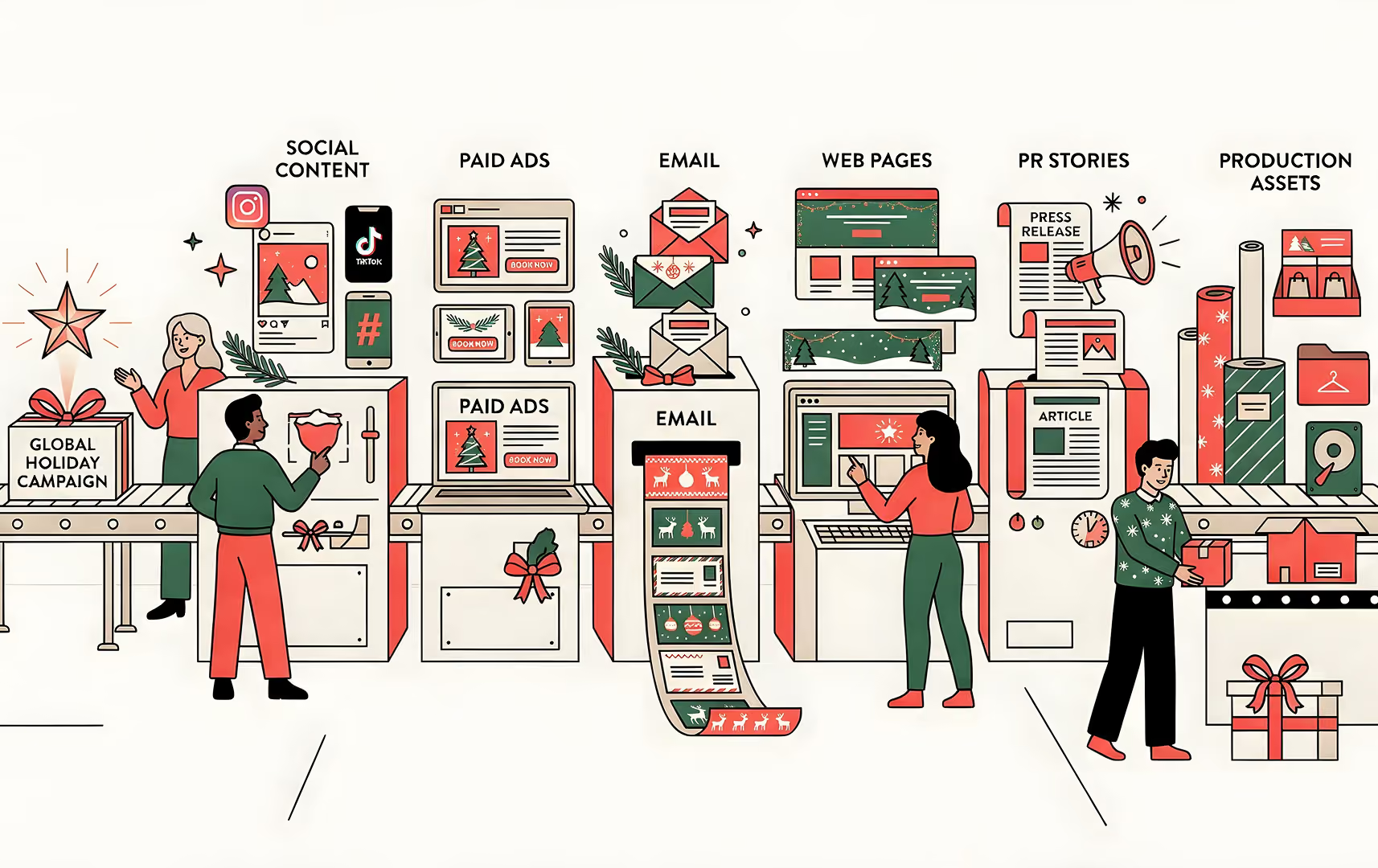
If you’re a company launching a new service, PR could help establish credibility through relevant media coverage, while targeted paid advertising reaches people already searching for similar offerings. Social content can build familiarity with the brand, and the website needs to give interested visitors a clear next step.
Each channel contributes something unique to the overall campaign but you have to make sure those contributions connect.
Someone who discovers your brand through an ad should recognize the message when they reach your website. A social campaign promoting a new offering should align with what your sales team is communicating. If people move between channels and encounter completely different messages, the campaign starts losing its direction.
Having an integrated marketing strategy becomes especially valuable because instead of developing separate plans for every department, brands can coordinate creative and campaign timing around the same objectives.
The social media strategy and content calendar need to support what's happening across the rest of the marketing mix. Even the most engaging social post can only do so much if the experience waiting on the other side of the click doesn't deliver.
Nothing brings an ambitious marketing plan back down to earth quite like opening the budget spreadsheet.
That big spring campaign might look incredible on paper, but production and promotion costs add up quickly. Marketing budget planning should happen alongside campaign development, while there's still room to make smart decisions about where the money goes.
Not every initiative needs the same level of investment. Prioritize campaigns based on their potential contribution to business goals, and be realistic about your team's capacity to execute them. Even a well-funded campaign can fall short if there aren't enough people or resources to bring it to life.
And avoid allocating every dollar before the year begins. Leave room to build on successful campaigns or pursue unexpected opportunities as they arise.
Your 2027 marketing plan won't make it through the year untouched. Building flexibility into the plan starts with getting the execution details right:
That same planning should extend to measuring results. According to NielsenIQ's 2026 CMO Outlook, 54% of CMOs said connecting data from different sources was a major barrier to generating insights.
If your goal is generating qualified leads, for example, impressions and engagement only tell part of the story. You also need to understand which channels are helping generate those leads and where your investments are paying off.
Review those results regularly and use what you learn to adjust creative, campaign timing, or budget allocations. That gives your team room to respond throughout the year without rewriting the entire strategy every time something changes.
Please keep the content calendar. Your marketing team still needs to know what's going live next Wednesday. Just make sure there's a strategy that has all the campaigns across multiple platforms working in unison.
At Tuuti, we help brands connect those pieces from the beginning. Our team brings strategy, creative, digital, social, and PR expertise together to build campaigns around clear business objectives, then carries that work through execution.
We know a great idea needs the right plan behind it. And a great plan deserves a team that can bring it to life.
Ready to put some serious strategy behind your 2027 marketing calendar? Contact Tuuti, and let's make every campaign earn its place.