A Creative Marketing Agency
BOISE, ID
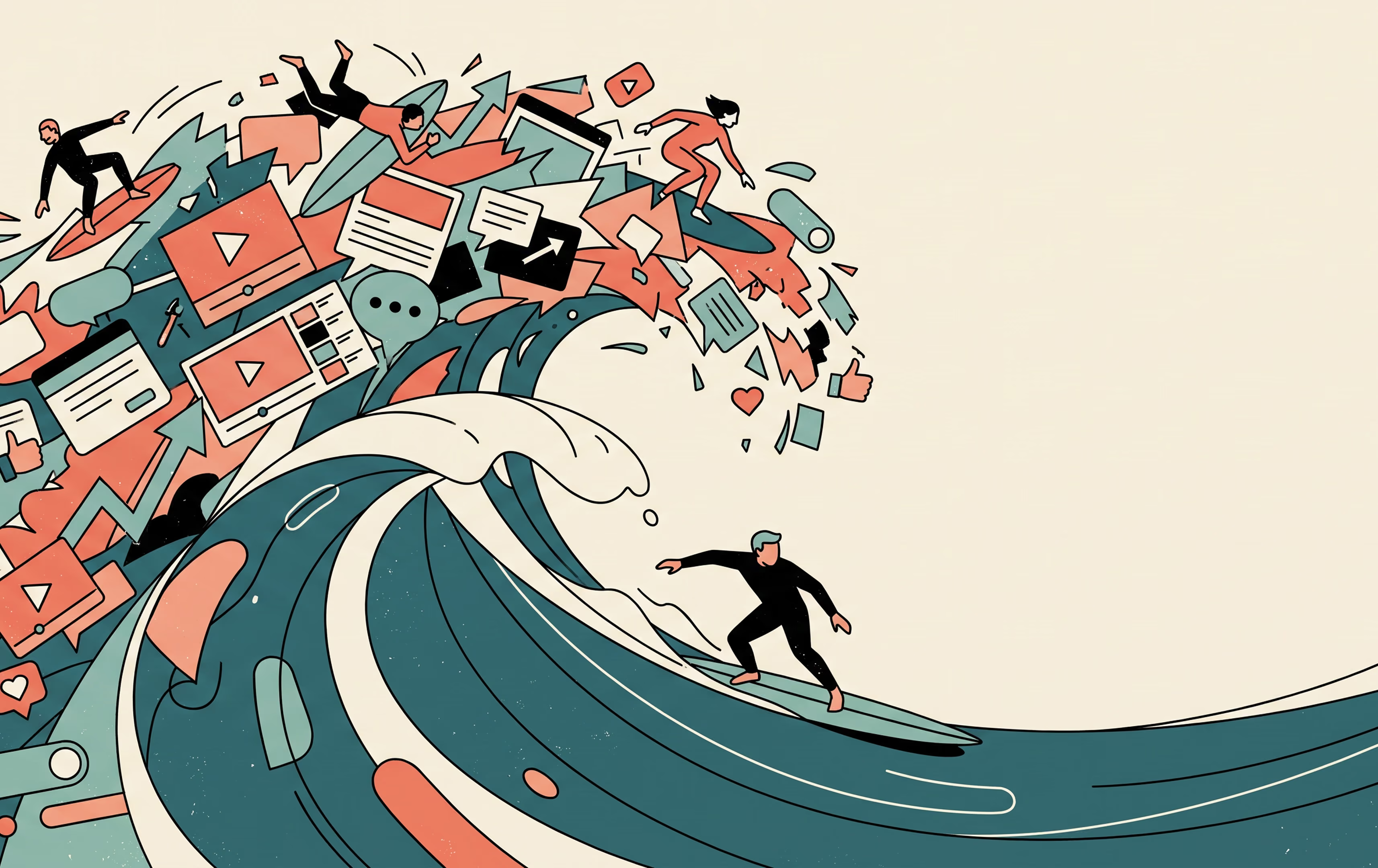
Summer 2026 has been a trend-setting one, to say the least. Blink, and a clever format is already overused with every creator and brand boarding the trend ship.
We maxxed our fiber. We declared “five things worth the money.” We made mundane life choices “kinda chic” and put pale yellow text over posts. A normal day at the office could suddenly become a Netflix documentary, complete with confessionals and unnecessary suspense.
This go-go-go pacing is part of what makes social fun. But it also makes trend-chasing tricky. By the time a brand gets approval to join in, the internet may have already moved on — or every other brand may have made the exact same joke.
Some of this summer’s biggest formats will disappear just as quickly as they arrived, so brands should think twice before repurposing every trend they see.
Before we pack away summer 2026 with the pool floats and SPF, let’s look at what took over the feed and see what might actually stick around… and why.
Apparently, we all had something to say this summer. A lot to say.
The rise of “yapping” content gave us longer talking videos, mini-vlogs, loosely structured stories, and creators who seemed perfectly comfortable turning on the camera without polishing every thought into a perfectly packaged post.
This looseness feels noticeable after years of increasingly optimized social content. Instead of trying to remove every pause or tangent, creators are letting more of the conversation stay in — and audiences seem willing to linger with them.
There’s a broader appetite for less performative posting behind it. Vogue recently explored growing fatigue with social platforms that feel increasingly polished and high-consequence. Posting can start to feel more like maintaining a public product than hanging out online. The publication points toward renewed interest in spaces where people can experiment with formats to talk and participate more freely.
Hootsuite sees a similar appetite for the human touch. Its 2026 social trends research points to brands leaning into human-made content and slight imperfections as AI-generated content becomes increasingly common.
The word “yapping” has an appeal behind it that could lead to more staying power. People are responding to content for engaging conversation and personality with a capital “Y.” No one wants to hear someone sanding everything down until it sounds interchangeable.
This summer, ordinary social content got a dramatic upgrade. We’re talking major motion pictures straight to your pocket movie streamer.
Netflix-style edits, mockumentaries, micro-dramas, reaction shots, and episodic videos gave the everyday mundane the treatment of prestige television. A team meeting could suddenly have confessionals or a minor office inconvenience could become a cliffhanger.
The joke works because the production style takes something familiar and treats it with completely unnecessary seriousness. But it also reflects a larger change in what people expect from social media.
Hootsuite identifies micro-dramas as one of its major 2026 trends, pointing to the growth of entertainment and social-first series built specifically for the feed.
The faux-documentary edit will eventually get old, just like every recognizable editing style does. What has more room to grow is the idea of building social content people actually want to follow. Recurring personalities, running jokes, serialized ideas, and stories that continue from one post to the next encourage audiences a reason to come back and eat up more content.
Your brand does not need its own cinematic universe, but it does need to give people something worth watching.
If social media had its way, we’d be living in 2016 again. Cue the throwback sounds, old internet references, archived clips. The mid-2010s aesthetics have all found their way back into the feed. Totally lit and on fleek.
Vogue called out the 2016 revival earlier this year, connecting some of its appeal to nostalgia for a less polished, and more playful internet. Hootsuite describes the broader behavior as “nostalgic remix culture.”
This remixing creates multitudes of opportunities for brands with history. An old campaign can become a new reference point while archived packaging can become a social post. Former taglines, products, or cultural moments can give longtime customers the satisfaction of recognizing something plus introduce newer audiences to a piece of brand history they missed.
Society's habit of recycling familiar culture into something new is worth reminiscing over, even if the specific decade everyone is nostalgic for changes.
Yup. You knew we had to talk about it.
“Kinda chic” became one of summer 2026’s most recognizable formats.
Pale yellow text, a hyper-specific observation, and the declaration for an otherwise ordinary habit was, in fact, kinda chic.
The examples were endless:
According to The Guardian, Google searches for the phrase jumped 5,000%, while the Instagram hashtag had surpassed 60,000 posts by mid-August. Boots, Aldi, Virgin Atlantic, celebrities, influencers, and a wide array of other accounts joined in.
Its popularity came partly from how easy the format was to understand. Take a tiny behavior someone recognizes in themselves, frame it with a wink, and suddenly the audience is in on the joke.
The Guardian’s coverage pointed to criticism of the trend’s copy-and-paste quality once seemingly every account had found its own version. The yellow text might catch your eye, but repetition only works for so long when the observation underneath it could have come from anyone.
When trends start to explode exponentially, it’s usually because it gives people an avenue to see themselves in. But be aware how much mileage a specific, recognizable observation can get… and when it probably should be retired when it starts to become saturated.
Ah, “maxxing.” This summer suffix has attached itself to almost anything. Literally. Anything.
Google’s Summergeist trends report highlighted the broader “maxxing” phenomenon, including a 115% increase in searches for “fibermaxxing” over the previous 90 days.
Once the structure became familiar, the variations kept coming: sleepmaxxing, beautymaxxing, moneymaxxing, hydrationmaxxing, tokenmaxxing, and whatever else the internet decided deserved MAXimum effort.
The adaptability is why the format spread. People understand the joke so it got more ridiculous as it evolved. It’s almost its own lore at this point (yes, there’s even LOREmaxxing).
For brands, though, endlessly adaptable can become endlessly tempting. If almost any product, service, or behavior can be turned into a “maxxing” post, does your version add anything beyond proving you noticed the trend?
The useful lesson here is the power of recognizable language that gives an audience an immediate way into the idea. The not-so-useful lesson would be assuming every flexible format needs a branded variation.
The internet that spent years convincing us to buy more has also been asking a more selective question: what is actually worth the money?
The “five things worth the money” format gave creators a quick way to name the products, experiences, or investments they can “ten toes down” think deserve the spend. The lists could be practical, indulgent, ridiculous, or a mix of all three, which made the format easy to adapt.
It also fits into a larger shift toward underconsumption and more deliberate purchasing. TikTok’s 2026 trend forecast calls this search for value “Emotional ROI,” predicting that consumers will increasingly want a stronger reason behind what they buy.
This emotional purpose gives brands more to work with than another round of product hype. A financial company could talk about what is worth investing in while a marketing agency could share where it would put the budget.
The format itself will eventually rotate out, but people are always looking for help deciding what deserves their money. What makes valuable content is an actual point of view rather than simply telling them to buy.
“Brand content” and “creator content” have been molding together for a while, and this summer blurred the lines between the titles a bit more.
More brand accounts are letting recognizable people carry the content. Employees — even C-Suite execs — become spokespeople for the brand.
Hootsuite identifies this creatorship as part of its broader “humanizing brands” trend. TikTok’s 2026 forecast even encourages brands to pay closer attention to how communities actually speak and participate — each tangent in the comment section can turn into valuable social info.
The important part is not making a company account pretend to be an influencer, though. Creators need to build familiarity over time and respond to the audience promptly. Their content needs to belong to the platform so it doesn’t feel like a campaign asset.
Brands can do the same without losing who they are. In fact, the more recognizable the brand’s own perspective becomes, there’s less of a temptation to borrow someone else’s.
Trend participation has always required timing, but the window is getting tighter. A format can move from funny to unavoidable to exhausted before a traditional campaign approval process has finished doing its rounds.
Hootsuite calls the faster response model “fastvertising”: brands reacting to cultural moments quickly enough to participate while the conversation is still active.
That puts pressure on social teams to move quickly, but you have to stay “on brand.” Some formats are broad enough to remix freely, but even a brand can catch a trend at exactly the right moment and still miss the context completely.
Fast social teams need room to react, but they also need people who can recognize the difference between “we could do this” and “we should do this.”
Summer 2026 gave brands plenty of ways to join the conversation. Behaviors underneath those trends tell us more about where social media is headed.
Audiences expect entertainment from the feed, but they also want usefulness when they are deciding what deserves their money or attention. They respond to cultural references when the person or brand using them understands the reference well enough to add something.
Almost anything trend can be adapted. But is it the right call? Ask yourself:
Trends move too quickly to deserve a strategy built entirely around them. They work better as creative openings for a brand to enter a conversation readily able to contribute.
At Tuuti, we live and breathe social strategy. We can help develop your overarching social media strategy so you know exactly when to jump on these trend ships or not. Because there’s much more to social media than just trends.
Want to learn more? Work with us for everything from strategy and content creation to posting and engagement — and let us keep a weather eye on the social horizon for you.